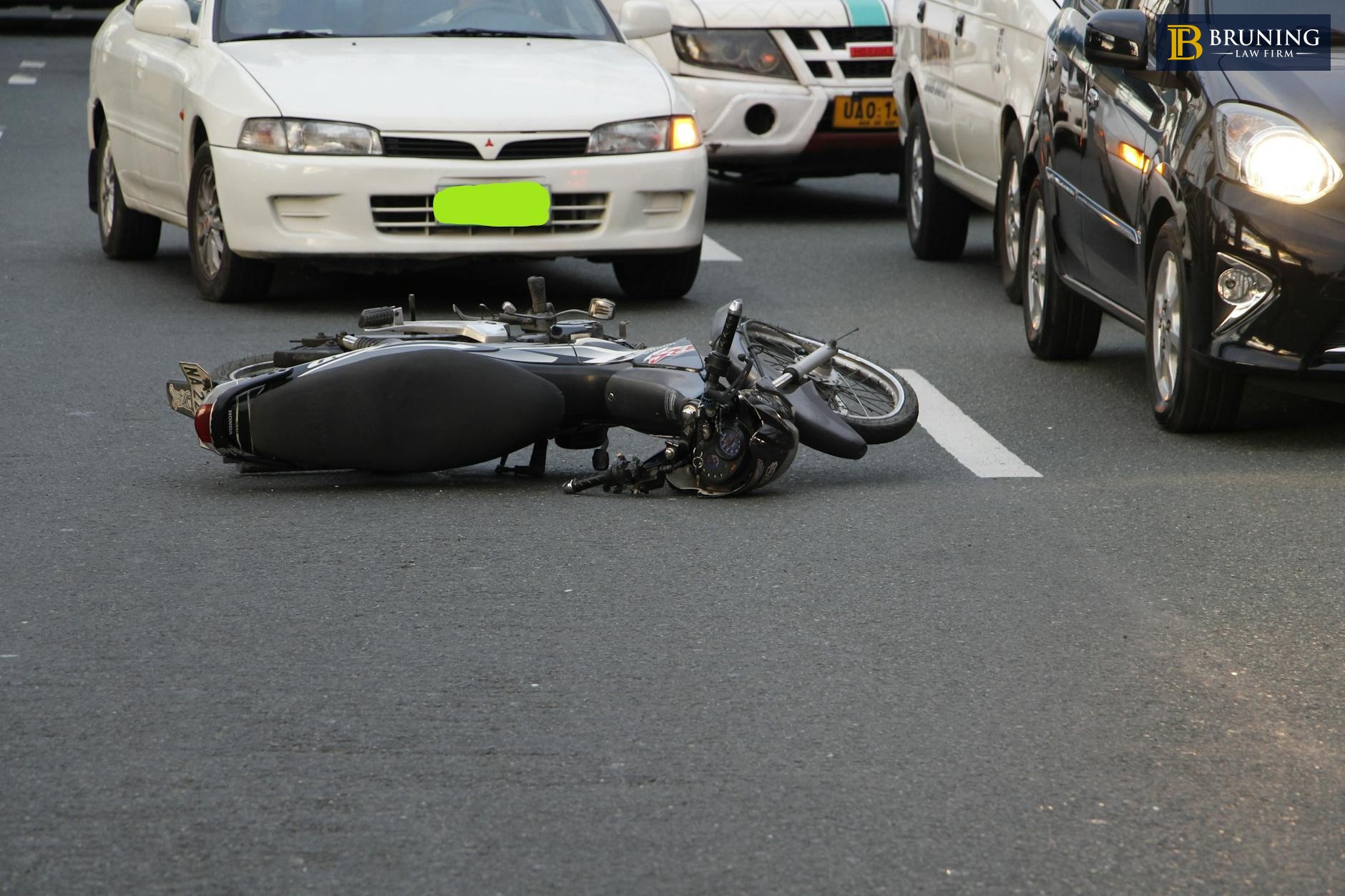

Motorcycle accidents are commonly caused by distracted drivers, failure to yield, unsafe lane changes, and impaired driving. Understanding these causes helps establish liability and strengthens your personal injury claim after a collision.
- Driver Inattention and Distracted Driving
- Failure to Yield Right-of-Way
- Speeding and Reckless Driving
- Impaired Driving
- Poor Road Conditions
- Vehicle Defects and Mechanical Failures
- Inadequate Driver Training
- Intersection Design and Traffic Control
- Commercial Vehicle Hazards
- Medical Considerations in Motorcycle Accidents
- Building Strong Legal Cases
- Insurance Coverage Issues
- Taking Action After a Motorcycle Accident
- The Importance of Legal Representation
Motorcycle accidents happen with devastating frequency, often resulting in catastrophic injuries that change lives forever. Understanding the underlying causes of these crashes isn’t just about statistics—it’s about recognizing patterns of negligence that lead to preventable tragedies.
When riders suffer a severe injury due to someone else’s carelessness, identifying the specific cause becomes crucial for building a strong legal case and obtaining the compensation needed for recovery. Working with a motorcycle accident attorney who understands these common causes can make the difference between struggling with overwhelming expenses and securing the financial support needed to rebuild your life.
Driver Inattention and Distracted Driving
Motorcycle accidents often happen because other drivers fail to see them. Even when drivers look, they might miss motorcycles that are right in front of them. This is because they’re not trained to look for motorcycles or give them enough attention.
Distracted driving is a big problem for motorcyclists. Drivers who text, talk on phones, or do other distracting things are less likely to notice motorcycles. This can be deadly for riders because it leaves no room for error.
Drivers can be distracted in different ways, like physically or mentally. Even if they’re looking at the road, their minds might be elsewhere, making them less aware of motorcycles. This type of distraction is especially dangerous because it’s hard to notice. As a result, motorcyclists need to be extra careful and aware of their surroundings to stay safe.
Failure to Yield Right-of-Way
Right-of-way violations represent one of the most common causes of serious motorcycle accidents. These violations typically occur at intersections when drivers fail to yield to motorcycles that have the legal right to proceed. The consequences are often severe because motorcyclists have little protection when struck by larger vehicles.
Left-turn accidents are particularly deadly for motorcyclists. These crashes happen when drivers making left turns fail to yield to oncoming motorcycles. The driver may not see the motorcycle, misjudge its speed, or assume they have time to complete the turn. For motorcyclists, these accidents often result in head-on or side-impact collisions that cause catastrophic injuries.
Intersection accidents occur when drivers run stop signs or red lights, failing to yield to motorcycles that have the right-of-way. These violations may result from impatience, distraction, or poor judgment, but they create dangerous situations that can be fatal for riders. The impact force in these accidents is often severe because both vehicles may be traveling at significant speeds.
Merge-related accidents happen when drivers fail to properly check blind spots before changing lanes or merging onto highways. Motorcycles can be difficult to see in the side mirrors, and drivers who don’t take extra care to check their blind spots may merge directly into motorcycles traveling in adjacent lanes.
Speeding and Reckless Driving
Excessive speed contributes to motorcycle accidents in multiple ways, affecting the likelihood of crashes and the severity of resulting injuries. When drivers exceed posted speed limits or drive too fast for conditions, they reduce their ability to respond to unexpected situations and increase the force of impact when accidents occur.
Aggressive driving behaviors put motorcyclists at risk because riders have limited options for avoiding dangerous situations. Drivers who tailgate, weave between lanes, or make aggressive maneuvers create hazardous conditions that can be impossible for motorcyclists to navigate safely.
Road rage incidents sometimes target motorcyclists specifically, with drivers using their vehicles as weapons against riders. These intentional acts of aggression can result in severe injuries or death, and they often involve criminal charges in addition to civil liability.
Racing and stunting by other drivers create unpredictable situations that endanger everyone on the road. When drivers engage in these activities, they make sudden movements and travel at excessive speeds that give other road users little time to react.
Impaired Driving
Alcohol and drug impairment remain significant factors in motorcycle accidents, with impaired drivers posing serious threats to riders. Impaired drivers have reduced reaction times, impaired judgment, and diminished ability to perceive and respond to motorcycles on the road.
Drunk driving accidents often occur during evening and weekend hours when more people are traveling to and from social events. These accidents can be particularly severe because impaired drivers may not attempt to avoid collisions or may actually accelerate through impacts.
Drug impairment, including both illegal substances and prescription medications, creates similar dangers to alcohol impairment. Drivers under the influence of drugs may have altered perceptions, reduced coordination, and impaired decision-making abilities that make them dangerous to motorcyclists.
Prescription medication effects can impair driving ability even when medications are used as directed. Drivers may not realize that their medications affect their driving ability, creating unexpected hazards for motorcyclists who assume other drivers are alert and capable.
Poor Road Conditions
Hazardous road conditions affect motorcycles more severely than other vehicles due to their two-wheeled design and reduced stability. Conditions that might cause minor inconvenience for car drivers can result in serious accidents for motorcyclists.
Potholes and road debris pose particular dangers to motorcycles because they can cause riders to lose control or crash. Local governments and road maintenance agencies have responsibilities to maintain safe road conditions, and their failure to address known hazards can result in liability for accidents.
Construction zones create multiple hazards for motorcyclists, including uneven surfaces, debris, narrowed lanes, and confusing traffic patterns. Construction companies and government agencies have duties to properly mark hazards and maintain safe conditions for all road users.
Weather-related conditions like rain, snow, and ice affect motorcycles more severely than other vehicles. While motorcyclists may choose to ride in these conditions, other drivers have increased responsibilities to exercise extra caution when motorcycles are present.
Vehicle Defects and Mechanical Failures
Mechanical problems with other vehicles can cause accidents that injure motorcyclists. When vehicles experience brake failures, tire blowouts, or other mechanical problems, the resulting loss of control can create dangerous situations for nearby motorcycles.
Automobile manufacturing defects may contribute to motorcycle accidents. When vehicles have design flaws or manufacturing defects that affect their safety systems, other road users, including motorcyclists, may be injured as a result.
Maintenance negligence by vehicle owners can result in mechanical failures that endanger motorcyclists. Drivers have the responsibility to maintain their vehicles in safe operating condition, and failure to do so can result in liability when accidents occur.
Inadequate Driver Training
Many drivers receive inadequate training about sharing the road with motorcycles. Driver education programs often provide minimal instruction about motorcycle awareness, leaving drivers unprepared to safely interact with motorcycles on the road.
Testing requirements for driver’s licenses typically include limited assessment of motorcycle awareness skills. This gap in testing means that many drivers receive licenses without demonstrating adequate knowledge about motorcycle visibility and safety considerations.
Continuing education about motorcycle safety is rarely required for drivers, meaning many people drive for years without updates to their knowledge about sharing the road with motorcycles. This lack of ongoing education contributes to the persistence of dangerous behaviors.
Intersection Design and Traffic Control
Poorly designed intersections can contribute to motorcycle accidents by creating visibility problems or confusing traffic patterns. Traffic engineers and local governments have the responsibility to design intersections that accommodate all types of vehicles safely.
Inadequate signage may fail to warn drivers about motorcycle traffic or provide clear guidance about right-of-way rules. When signage is missing, unclear, or poorly placed, it can contribute to accidents involving motorcycles.
Traffic signal timing may not account for motorcycle acceleration and braking characteristics, creating situations where motorcycles are caught in intersections when signals change. Proper signal timing should consider the needs of all road users, including motorcycles.
Commercial Vehicle Hazards
Large trucks pose particular dangers to motorcyclists due to their size, weight, and blind spot limitations. Truck drivers have special responsibilities to be aware of motorcycles, but accidents still occur when these responsibilities aren’t met.
Blind spot accidents happen when truck drivers change lanes or turn without being aware of motorcycles in their blind spots. These accidents can be particularly severe due to the size difference between trucks and motorcycles.
Following distance violations by truck drivers can result in rear-end collisions that are often fatal for motorcyclists. Trucks require longer stopping distances than cars, and drivers who follow too closely may be unable to stop in time when motorcycles slow down or stop suddenly.
Medical Considerations in Motorcycle Accidents
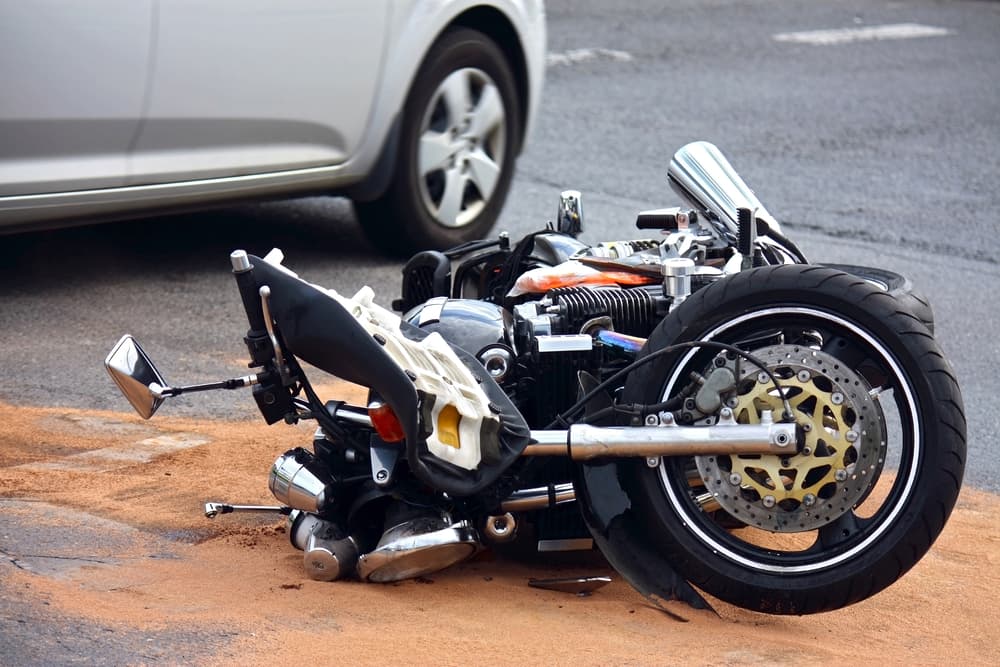
Motorcycle accidents can cause severe injuries that require immediate medical attention and long-term care. Traumatic brain injuries can affect cognitive function, personality, and ability to work, even with helmet use. Spinal cord injuries can lead to permanent paralysis and require lifetime medical care, resulting in huge costs.
Orthopedic injuries, like broken bones and joint damage, can require multiple surgeries and extended rehabilitation. A motorcycle accident attorney can help document the full extent of these injuries and their impact on your life. They’ll work with medical experts to calculate future costs and ensure you receive fair compensation for all related expenses.
By understanding the medical aspects of your injuries, your attorney can build a strong case and fight for the compensation you deserve. It includes medical treatment, adaptive equipment, and ongoing care needs.
Building Strong Legal Cases
Motorcycle accident cases require thorough investigation and skilled legal advocacy to achieve successful outcomes. Your attorney will work to identify all responsible parties and pursue compensation from every available source.
Liability analysis involves examining all factors that contributed to your accident. It may include driver negligence, road conditions, vehicle defects, and other contributing factors. Your attorney will investigate all potential sources of liability to ensure that you receive maximum compensation.
Damage calculations in motorcycle accident cases must account for the full extent of your losses. It includes medical expenses, lost income, pain and suffering, and future needs related to your injuries. Your attorney will work with experts to accurately calculate these damages.
Expert witnesses play vital roles in motorcycle accident cases, providing testimony about accident reconstruction, medical issues, and other technical matters. Your attorney will engage qualified experts to strengthen your case and counter-defense arguments.
Insurance Coverage Issues
Motorcycle accident cases often involve complex insurance coverage issues that can affect the amount of compensation available. Understanding these issues is vital for ensuring you receive appropriate compensation for your injuries.
Uninsured and underinsured motorist coverage may provide additional compensation when the at-fault driver lacks adequate insurance. Your attorney will review your insurance policy to identify all available coverage and ensure that you receive maximum benefits.
Medical payment coverage may be available through your insurance policy to help cover immediate medical expenses. This coverage can be important for ensuring that you receive necessary medical treatment while your case is pending.
Taking Action After a Motorcycle Accident
The period immediately following a motorcycle accident is critical for protecting your rights and preserving your ability to seek compensation. While your primary focus should be on getting medical treatment, taking certain steps can significantly impact your case.
Seeking immediate medical attention is essential for your health and your legal case. Some injuries may not be immediately apparent, even if you don’t think you’re seriously injured. Medical documentation from the scene and immediately following the accident provides important evidence for your case.
Avoiding recorded statements to insurance companies is important because these statements can be used against you later. Insurance adjusters may try to get you to make statements that minimize your injuries or suggest that you were partially responsible for the accident.
Contacting a motorcycle accident attorney as soon as possible after your accident helps ensure that your rights are protected from the beginning. Your attorney can handle communications with insurance companies, preserve evidence, and begin building your case while you focus on recovery.
The Importance of Legal Representation
Motorcycle accident cases present unique challenges that require knowledge and experience in this area of the law. Insurance companies often have biases against motorcyclists and may not offer fair compensation without skilled legal advocacy.
Your attorney will understand the common causes of motorcycle accidents and know how to investigate these factors in your case. They’ll work to identify all responsible parties and pursue compensation from every available source. Most importantly, they’ll fight to ensure that you receive appropriate compensation for the full extent of your injuries and losses.
Contact a motorcycle accident attorney today to discuss your case and begin protecting your rights. The sooner you get legal help, the better your chances of receiving compensation to recover from your injuries and rebuild your life.

A.J. Bruning
Founder
I was born and raised to represent individuals who have been needlessly injured. I mean that literally. At a young age my father would tell me about the clients he was representing. I would meet them and take pride in their admiration of my father. I always knew I wanted to be a lawyer and represent clients that needed my help.
Author's Bio